
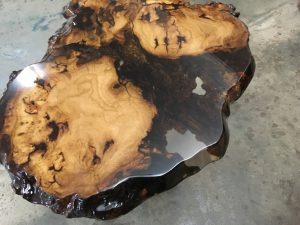
Resin for Timber slabs has been widely researched the advantages of use result in a fabulous finish for your project. The Sunshine Coast area enjoy using natural timber slabs, and applying Barnes Resin is a bonus for a project finisher.
Over the past several years, there has been a significant increase in the use of resin for woodworking. This includes furniture made from kiln dried timber slabs. The advantages of using Barnes Resin for your next carpentry project with timber slabs may be more than worth the effort.
To better understand if resin is workable for you begins with what the product is and how it is used?
What is Resin?
Resin is a liquid that when mixed with a hardener becomes a solid plastic material. It is often called Barnes Resin thanks to the popularity of the brand. But there are three types of resin that are available.
- Natural: Resins that are soluble in spirits and often used in varnishes
- Synthetic: Sometimes called epoxy resin that becomes quite solid when cured
- Bio-resin: This type uses environmentally friendly products
Knowing more about each type of resin will help you make the best-informed decision about which one is right for your needs.
Natural Resin for Timber Slabs
This type of resin is derived from plants and often found as residue on the outside of trees and other types of plants. Sometimes, this form of resin for Kiln dired timber slabs comes from deposits left by insects.
Shellac is a natural resin which is left by the lac bug in India. Because shellac is soluble in alcohol, it makes it easy to work with and creates a stunning finish.
But there are other forms of natural resin. One example is amber, this comes from softwood trees that have been fossilized, along with tung and linseed oils.
The benefits of using natural resin for timber slabs begin with its environmentally friendly origins. Plus, such resins are highly versatile and work well as finishes for projects made from timber slabs.
However, it does take a long time to cure a natural resin. And if the layers are too thick, it will not cure at all. So, you need to be careful when applying it.
Synthetic Resin for Timber
Synthetic resins are quite common and are well-known as epoxy, polyurethane, acrylic, silicone, and other types as well. Such resins consist of two parts that are mixed to cure.
You can choose from different types of Barnes resins to meet the requirements of the wood. And when the resin cures, it leaves behind a non-toxic surface.
However, synthetic resins are not biodegradable. And when curing, they give off toxic fumes so there needs to be ventilation and protection when applying the resin.
Bio-Resins for Timber Slabs
Bio-resins are made mostly from natural sources such as sugars, starches, and organic oils. Because they are natural and biodegradable, they are often seen as the most environmentally safe choice for many projects.
In fact, bio-resins are recyclable and can replace many synthetic resins. However, many bio-resins still use petrochemicals in their mix.
And are not as fully tested or proven as synthetic or natural resins.
When using resins for timber slabs, Barnes resin for your next project with timber slabs, be sure to choose the product that is best suited for your needs. On the Sunshine Coast, Barnes resin for kiln dried timber slabs is one of the most tested and proven.
Timber Slab Warehouse have tested and proven the wonders of this resin. Contact our staff for more information. Or call on 0415 811 905 we can point you in the right direction to look for resin for timber slabs.


